Table of Contents
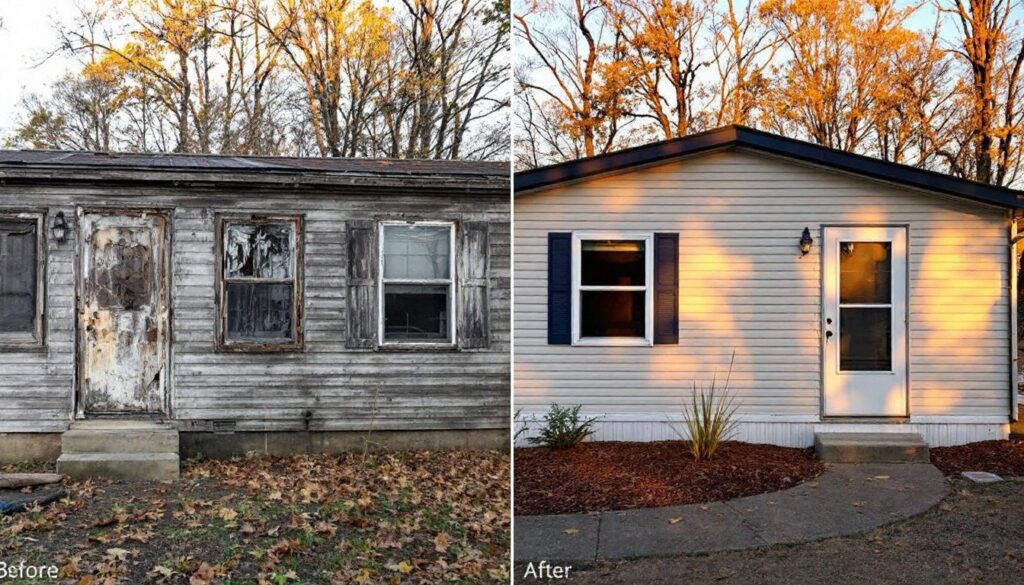
ToggleA single-wide mobile home exterior remodel doesn’t require a full teardown to make a dramatic impact. The right upgrades, fresh siding, a solid roof, updated entry doors, and thoughtful landscaping, transform curb appeal while protecting against weather and extending the home’s lifespan. Most exterior remodeling projects are within reach for confident DIYers, though structural or weather-sealing work may need a licensed professional. This guide walks through the highest-impact exterior changes, what to expect in terms of difficulty and materials, and how to plan a cohesive remodel that delivers real value.
Key Takeaways
- A single-wide mobile home exterior remodel prioritizes roof repairs and siding upgrades first, as these prevent water damage, protect structural integrity, and deliver the highest curb appeal impact.
- Vinyl siding ($4–$8 per linear foot) is the most affordable and low-maintenance option for mobile homes, while proper installation with expansion gaps and house wrap prevents buckling and water intrusion.
- Upgrading to energy-efficient dual-pane windows and new entry doors reduces heating and cooling costs by 20–30% while transforming the home’s appearance and buyer perception.
- Mobile home roofs typically last 15–20 years; professional replacement ($5,000–$8,000) ensures proper sealing and warranty, though professional work is worth the investment to prevent hidden interior damage.
- Landscaping and grading improvements (native plants, proper drainage slope away from the foundation) are the most affordable ROI projects and make a weathered exterior feel cared-for and intentional.
- A cohesive remodel that groups new siding, fresh entry doors, updated windows, and landscaping together creates a dramatic before-and-after transformation that boosts resale value and livability.
Why Exterior Remodeling Matters for Mobile Home Owners
Mobile homes face unique weather challenges, wind uplift, water intrusion at seams, and UV damage, because they’re built lighter than site-built homes and sit closer to the ground. An exterior remodel addresses these vulnerabilities while boosting resale value and livability.
Curb appeal matters, but durability matters more. A faded, damaged exterior invites leaks and rot, which can compromise the interior framing and insulation. Upgrading siding, roofing, and seals is preventive maintenance dressed up as renovation. Beyond protection, fresh windows, doors, and landscaping signal care and investment, factors that influence buyer perception and your own satisfaction living there.
Most exterior remodels also improve energy efficiency. Newer windows and proper insulation reduce heating and cooling costs, which is especially noticeable in mobile homes due to their smaller volume.
Foundation and Siding: The Most Impactful Changes
Siding is the first line of defense and the most visible element. Mobile homes typically come with either metal, vinyl, or (rarely) wood siding. Before choosing a replacement, inspect the condition of the substrate, the plywood or OSB sheathing underneath. If water damage is visible or the structure feels soft, repair or replace the underlying material before installing new siding.
When it comes to material, vinyl siding dominates the mobile home market because it’s affordable, low-maintenance, and doesn’t require painting. Expect to pay $4–$8 per linear foot installed, though pricing varies by region and material grade. Metal siding is more durable in high-wind areas but dents easier and can rust at cut edges if not sealed. Fiber cement (like Hardie board) offers a wood look with better durability but costs $6–$12 per linear foot and requires painting every 10 years.
Upgrading Siding Materials for Durability and Curb Appeal
Start by measuring the home’s linear footage. A typical single-wide is 12–14 feet wide and 60–80 feet long, yielding roughly 1,500–2,000 linear feet of siding, accounting for gables and heights.
Remove old siding carefully using a flat pry bar or siding removal tool, don’t tear the underlayment. Inspect for rot, mold, or pest damage. If you find damage larger than a few square feet, patch or replace that section before proceeding.
Install house wrap or felt underlayment to shed water and improve energy performance. The sheathing underneath should be solid and dry. Nail new siding at 16-inch intervals, ensuring nails go through studs (typically 16 inches apart on mobile homes). Leave 1/8-inch expansion gaps at corners and trim, siding moves with temperature, and if nailed too tight, it will buckle.
For a before-and-after impact, consider a contrasting trim color or a two-tone siding pattern. Light vinyl siding with darker trim creates visual interest and is forgiving for dirt: in dusty climates, consider medium tones that hide weathering.
Roofing and Weather Protection Upgrades
Mobile home roofs are typically low-slope and covered with TPO (thermoplastic polyolefin) or EPDM rubber. These membranes are economical but have a 15–20-year lifespan. If your roof is more than 15 years old or showing ponding water, blistering, or seams pulling apart, replacement should be your priority.
Roof replacement is heavy work and often requires a professional, especially for permitting and warranty. Removing old membrane and sealing seams correctly demands precision, a missed spot can leak for years before you notice interior damage. Professional installation runs $5,000–$8,000 for a typical single-wide, but DIY removal of old materials can reduce costs if you’re comfortable with the work.
Before replacing the entire roof, check for deteriorated wood decking or missing insulation underneath. Mobile homes often have thin decking, and water damage spreads quickly. If decking is soft or missing, it must be replaced for the new membrane to perform.
While you’re at it, upgrade gutter and downspout systems. Mobile homes often come with undersized gutters that overflow during heavy rain. Install 6-inch K-style gutters with proper slope (0.5-inch drop per 40 feet) and extend downspouts at least 4 feet from the foundation to direct water away. This single upgrade prevents grading erosion and foundation saturation, which are common problem areas.
Windows, Doors, and Entry Improvements
Replacing windows and entry doors is one of the most satisfying remodels because it transforms the home’s face and improves comfort immediately. Mobile homes typically come with single-pane or weak dual-pane windows: upgrading to energy-efficient, dual-pane, low-E windows with argon gas reduces heating and cooling loss by 20–30%.
Measure existing window openings carefully, mobile home framing isn’t always square. Measure at the top, middle, and bottom of each opening. Mobile home windows are often sized in increments (28×30, 36×28), but modern standard sizes may require shimming or minor frame adjustments. Consider vinyl windows with aluminum cladding on the exterior for durability: all-vinyl softens in direct sun, and aluminum clad windows resist warping.
Entry doors set the tone. A faded, rotting door screams neglect. A new fiberglass or steel entry door with sidelights, contemporary hardware, and a matching storm door costs $300–$800 installed and transforms the front of the home. Fiberglass mimics wood appearance, won’t rot, and provides better insulation than metal. Make sure the threshold is sealed with flexible caulk, this joint is a prime leak source.
For a single-wide, even replacing 8–10 windows and one or two entry doors is a manageable project if you’re comfortable with removal, shimming, and flashing. Watch installation videos and don’t skimp on flashing tape and caulk: water intrusion around windows is silent and destructive.
Landscaping and Outdoor Living Spaces
Landscaping is the easiest area for impact and one of the best ROI projects in home improvement. A single-wide surrounded by bare ground or dead shrubs signals poor maintenance: add a few trees, shrubs, and ground cover, and it feels cared-for.
Start with grading. Mobile homes can settle unevenly, creating low spots where water pools. Build up the grade around the foundation with topsoil, sloping away at 2–3% grade (about 1 inch of drop per 3 feet of horizontal run). This prevents water from sitting against the foundation and entering the crawlspace or piers.
Add landscape edging (metal or plastic) around planting beds to define spaces and prevent sod from creeping into beds. Plant native or regionally appropriate shrubs, dwarf evergreens, lilacs, or hydrangeas are hardy, low-maintenance, and add visual structure. Trees should be planted at least 10 feet from the home to avoid root damage to the foundation and piping. One or two shade trees transform a hot exterior in summer.
Add a small front porch, deck, or stoop if the entry sits directly on a short stair. A prefabricated covered entry or a simple treated-wood deck ($300–$800) creates a welcoming transition and provides weather protection. Consider a poured concrete pad for a future hot tub, propane grill, or seating area, it’s permanent, low-maintenance, and increases usable outdoor space. Ensure any deck or porch is properly anchored to the home’s frame and elevated to prevent water trapping underneath.
Grouping these elements, new siding, a fresh entry, landscaping, and updated windows, creates a cohesive before-and-after that feels intentional, not piecemeal.
Conclusion
A single-wide exterior remodel is achievable over one or two seasons. Prioritize based on urgency: roof leaks and structural water damage first, then siding and sealing, followed by windows and doors. Landscape improvements can happen at any time and are often the best way to stage the home if selling. Plan for permits if your jurisdiction requires them for roofing, siding, or structural additions. A solid remodel protects your investment, lowers operating costs, and turns a weathered mobile home into a place you’re proud to call home. Start with a complete walk-around inspection, document problem areas, and tackle projects in order of impact and dependency. The results speak for themselves.