
Table of Contents
ToggleMoving day logistics often come down to one question: does it fit? When a refrigerator is your puzzle piece, the temptation to lay it flat in a truck or trailer is real, especially when you’re working with tight spaces or a packed vehicle. But here’s the hard truth: hauling a refrigerator horizontally can damage it beyond repair. The internal mechanics of a modern fridge aren’t designed to handle sideways transport, and skipping this detail can cost you thousands in repairs or replacement. This guide walks through why position matters, what happens when you ignore it, and the right way to move your appliance safely.
Key Takeaways
- Hauling a refrigerator laying down can damage the compressor and oil system, potentially costing $300–$600 in repairs or more, because gravity is essential for proper coolant and oil circulation.
- The compressor requires constant oil lubrication to function; laying a fridge horizontally can push oil into refrigerant lines where it causes the compressor to run dry and seize within minutes of operation.
- Horizontal transport risks damaging the capillary tube and creating refrigerant leaks at sealed connection points, which may go undetected for weeks before cooling failure occurs.
- Always transport your refrigerator upright and secure it with ratchet straps to the truck bed; if you must lay it down temporarily, wait 4–6 hours (or up to 24 hours per manufacturer guidelines) before plugging it in.
- Measure doorways, hallways, and destination spaces before moving; if a fridge won’t fit upright, disassemble doors, find an alternate route, or hire professional movers rather than risk laying it down.
- Document your refrigerator’s condition with photos before and after transport, and keep it away from temperature extremes during the move to prevent pressure buildup and internal corrosion.
Why Position Matters When Moving a Refrigerator
A refrigerator isn’t just a box that keeps food cold. Inside, a sealed system of metal tubing circulates pressurized coolant through carefully engineered paths. This system includes a compressor, condenser, evaporator, and capillary tubes, all of which depend on gravity to work correctly. When you stand your fridge upright, gravity helps coolant and oil flow naturally to the compressor where they belong. Tip it on its side or lay it flat, and you’ve reversed the system’s assumptions about how liquid moves through those tubes.
The angle of transport matters because the compressor sits at the lowest point of the refrigerant circuit by design. Coolant is heavier than oil, and oil must stay in the compressor to lubricate its moving parts. In an upright position, oil pools at the bottom of the compressor: laying the unit down can push that oil into the refrigerant lines, where it doesn’t belong. Once that happens, the compressor can run dry when you power it back on, grinding without lubrication and seizing within minutes of operation.
The Risks of Transporting a Refrigerator Horizontally
Compressor And Oil Line Damage
The compressor is the heart of a refrigerator. It’s a motorized pump that circulates refrigerant through the system, and it relies on constant oil lubrication. When you haul a refrigerator horizontally, the oil can separate from the refrigerant and migrate into places where it blocks flow or prevents proper cooling action. Even if you only lay the fridge down for a few hours, the risk is real: the oil doesn’t instantly snap back into place once the unit is upright again.
Damage typically shows up when you plug the fridge back in. The compressor tries to run, but without adequate oil, friction builds instantly. You’ll hear grinding or squealing sounds, then silence as the motor burns out. Replacing a compressor costs $300–$600 for parts and labor, and that’s not counting the cost of evacuating the refrigerant system and recharging it, both jobs that require EPA certification and specialized tools.
Coolant System Complications
Refrigerant travels through a closed loop: compressor → condenser (outside coils) → evaporator (inside coils) → back to compressor. Moving a fridge horizontally can damage the capillary tube, a thin, precisely calibrated restriction that regulates how much refrigerant enters the evaporator. Dents, kinks, or blockages in this tube mean the refrigerant can’t flow at the right pressure or speed.
You might see leaks around seams or connection points that were never an issue before transport. Those connections were engineered and sealed when the system was upright: laying the unit down can shift internal components enough to crack solder joints or loosen fittings. Refrigerant leaks are invisible and deadly to your fridge’s cooling ability, once it’s gone, your food won’t stay cold, and refilling the system requires a licensed technician.
Problems can hide for weeks, too. A slow coolant leak might not make a noticeable difference right away, so you won’t know something went wrong until the fridge stops maintaining temperature. Good Housekeeping provides tested recommendations for evaluating appliance damage after a move, and most reviewers stress that cosmetic appearance isn’t an indicator of internal damage, a fridge can look fine and be ruined inside.
Best Practices for Safe Refrigerator Transport
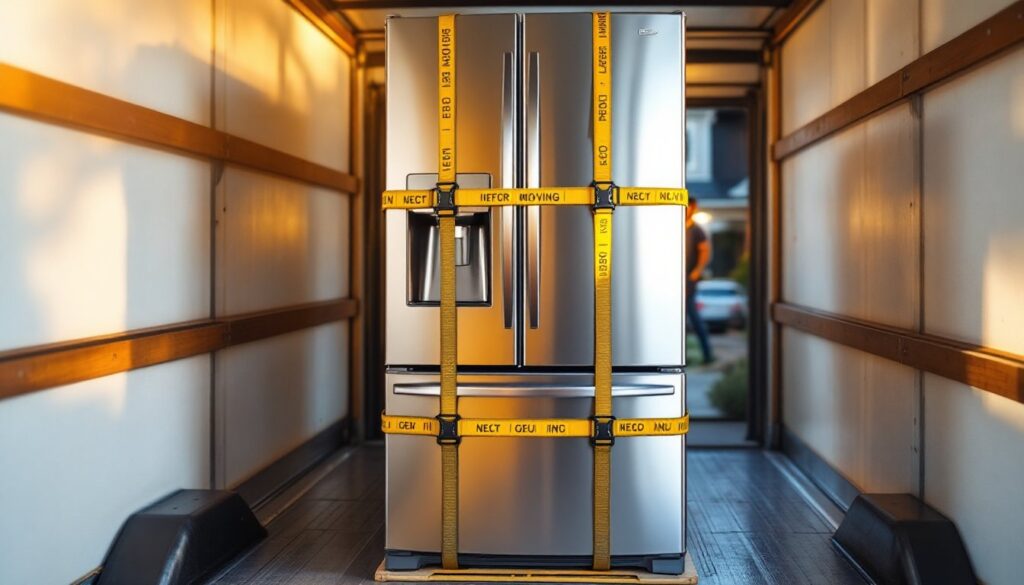
Transport the refrigerator upright whenever possible. This isn’t a suggestion, it’s the baseline. Secure it to the truck or trailer bed so it can’t tip, slide, or bounce. Use furniture pads or blankets under the feet to prevent tipping, and run ratchet straps across the width and depth of the unit to anchor it down. If you’re hiring movers, make sure they know it stays vertical: many professional moving companies specifically train staff on appliance transport and will refuse to lay a fridge down.
If layout or space absolutely demands laying the fridge down, wait at least 4–6 hours after moving before plugging it in. Some manufacturers recommend up to 24 hours of waiting time to allow oils to resettle. Check your owner’s manual, many brands specify “do not operate if laid down.” Even then, there’s no guarantee the compressor won’t fail. Some say it’s safer to let it sit even longer, but waiting doesn’t eliminate the risk: it just reduces the likelihood that a dry compressor will seize instantly.
Measure before you move. Standard refrigerators range from 28 to 36 inches wide and 65 to 75 inches tall (nominal dimensions: actual sizes vary by model). Measure your doorways, hallways, stairs, and the final destination spot. If a fridge won’t fit upright, you have three options: disassemble doors if the model allows it, use a different route, or hire professionals with the equipment and experience to manage an angled or temporary horizontal transport without disaster.
When moving into a new home, resources on moving checklists and planning tips often underestimate how much space large appliances need. Measure twice, measure three times. A few extra minutes now saves you hours of problem-solving and thousands in repairs later.
Keep the fridge away from temperature extremes during transport. Extreme heat or cold can affect the refrigerant and compressor oil. Don’t leave a fridge sitting in a hot truck for hours: the pressure inside the sealed system can build dangerously. In winter, don’t move a fridge from a cold garage directly into a warm home without letting it acclimate: condensation can form on internal components and cause corrosion.
Document the fridge’s condition before and after the move. Take photos of the exterior and note whether the compressor cycles on normally, whether the evaporator coils frost properly, and whether the fridge maintains temperature. If the fridge came from a previous owner, try to get proof it was working before transport. If damage shows up within days, documentation helps when filing claims with movers or dealing with warranty issues.
Conclusion
A refrigerator sitting on its side looks like an easy solution to a packing puzzle. It isn’t. The compressor, coolant, and oil inside are designed for one orientation, and moving them sideways or flat triggers damage that often doesn’t show up until it’s too late. Keep the fridge upright during transport, wait before plugging it in if that’s unavoidable, and don’t be tempted by shortcuts on moving day. Your future self will thank you when kitchen appliances are working properly.