Table of Contents
ToggleTiny homes have moved from fringe trend to mainstream reality. Homeowners and DIY enthusiasts are discovering that living small doesn’t mean sacrificing comfort or design. Whether you’re downsizing, building a guest house, or creating an ADU (accessory dwelling unit) for rental income, finding the right tiny home plans matters, and it doesn’t have to cost you thousands. Free tiny home plans are readily available online, offering detailed layouts, material lists, and construction guidance that can save you significant money upfront. This guide walks you through where to find quality plans, what features to prioritize, and how to move from design to actual construction.
Key Takeaways
- Free tiny home plans save $1,500 to $5,000 in architect fees while providing tested designs with framing diagrams, electrical layouts, and material lists.
- Reliable sources for free tiny home plans include government extension services, universities, and open-source platforms like Ana White’s collection and Fix This Build That.
- Essential plan features include detailed foundation specifications, clear electrical and plumbing layouts meeting NEC and IPC codes, and accurate materials lists with specific quantities and dimensions.
- Verify that your chosen tiny home plan accounts for your local climate, building codes, and zoning requirements before starting construction.
- Secure all required building permits, prepare your site properly, assemble a crew, and budget 4 to 8 months for completion to ensure structural integrity and legal compliance.
What Are Tiny Home Plans and Why They Matter
Tiny home plans are detailed architectural drawings and specifications for structures typically ranging from 100 to 400 square feet. Unlike a simple floor plan you’d sketch on paper, professional plans include framing diagrams, electrical layouts, plumbing schematics, material quantities, and step-by-step construction sequences.
For DIYers and budget-conscious builders, free plans are invaluable. They eliminate the $1,500 to $5,000 cost of hiring an architect or designer. More importantly, they’ve been refined by other builders, so you’re working from tested designs rather than starting from scratch.
Tiny homes work for several reasons. They’re affordable to build and maintain, require less energy to heat and cool, and sit on smaller land parcels, a huge advantage in tight real estate markets. Many municipalities now allow ADUs more readily than larger expansions, making tiny home plans the practical choice for adding value to your property. Before diving into plans, check your local zoning laws. Some jurisdictions require permits, foundation certifications, or utility connections that affect which plans work on your site.
Where to Find Free Tiny Home Plans Online
The internet hosts hundreds of free or low-cost tiny home plans. Knowing where to look, and how to evaluate quality, saves you time and headaches.
Government and Non-Profit Resources
Extension agencies and universities often publish free building plans. The USDA Cooperative Extension Service and land-grant universities maintain libraries of shed, cabin, and small dwelling plans tested for their regions. These plans account for local snow loads, wind speeds, and building traditions, making them particularly reliable.
Non-profits focused on sustainable housing and affordable dwelling also distribute free designs. Organizations working on housing insecurity sometimes release plans into the public domain. These resources are goldmines for conscientious builders who prioritize durability and efficiency over flashy aesthetics.
DIY Community Platforms and Databases
Open-source and community-driven websites let builders share plans freely. Ana White’s collection includes the Quartz Tiny House, a completely free downloadable tiny house plan with framing details, a materials list, and step-by-step instructions. Websites like Fix This Build That and The Handyman’s Daughter also host beginner-friendly projects and building tutorials.
These platforms often include user feedback and build photos, showing real-world results. You’ll see what worked, what didn’t, and tips from people who’ve already completed the project. Many offer downloadable PDFs with full materials lists, cutting diagrams, and assembly sequences, everything you need to price materials and start building.
Essential Features to Look For in Your Tiny Home Plan
Not all free plans are created equal. Here’s what separates a solid plan from one that’ll frustrate you halfway through.
Foundation and structural details matter first. Look for plans that specify foundation type, a concrete slab, pier and beam, or concrete stem wall. Tiny homes often sit on trailers (if mobile) or on standard foundations. The plan should tell you joist size, beam spans, and load-bearing wall locations. Vague foundation details mean you’ll guess or hire an engineer later, both expensive.
Electrical and plumbing layouts should be clear. A good plan shows outlet locations, circuit loads, and wire gauge. Plumbing runs should identify trap arms, vent stacks, and rough-in heights. These aren’t optional niceties, they’re required by the National Electrical Code (NEC) and International Plumbing Code (IPC). If a plan skips these details, it’s incomplete.
Materials lists must be specific. “2×4 lumber” is vague. A solid plan says “2×4×8′ studs (actual 1.5″ × 3.5″)” and lists quantities by location. Include fastener types and counts, window and door dimensions, roofing material, and insulation R-values. Accurate material lists let you get realistic pricing and avoid mid-project shortages.
Verify the plan matches your climate and codes. A tiny home designed for Georgia won’t account for Michigan snow loads or seismic zones. Many regions require special bracing, different rafter spacing, or foundation frost depths. Check the plan’s origin and compare it to your local building department’s requirements. A quick call to your building official prevents costly revisions later.
Look for accessibility and livability decisions. Stairs, doorway widths, and ceiling heights affect daily life. Some plans feel cramped because they prioritize cost over comfort. Stand in your actual space (or a nearby tiny home) to understand proportions before committing to a design.
Building Your Tiny Home: Practical Next Steps
Once you’ve chosen a plan, building starts with prep work, the step most DIYers underestimate.
First, get the right approvals. Contact your local building department. Some jurisdictions don’t require permits for structures under 200 square feet: others demand full permitting regardless of size. ADUs often need separate utility connections, electrical permits, and inspections. Permits cost money and time, but they protect your investment, ensure safety, and affect resale value. Building without required permits can force you to tear down work or face fines.
Second, prepare your site and gather materials. Tiny homes need level ground and proper drainage. Clear brush, compact soil, and establish your foundation per the plan’s specs. Order all materials at once if possible, prices fluctuate, and waiting six weeks might mean paying more. Organize delivery to avoid theft and weather damage.
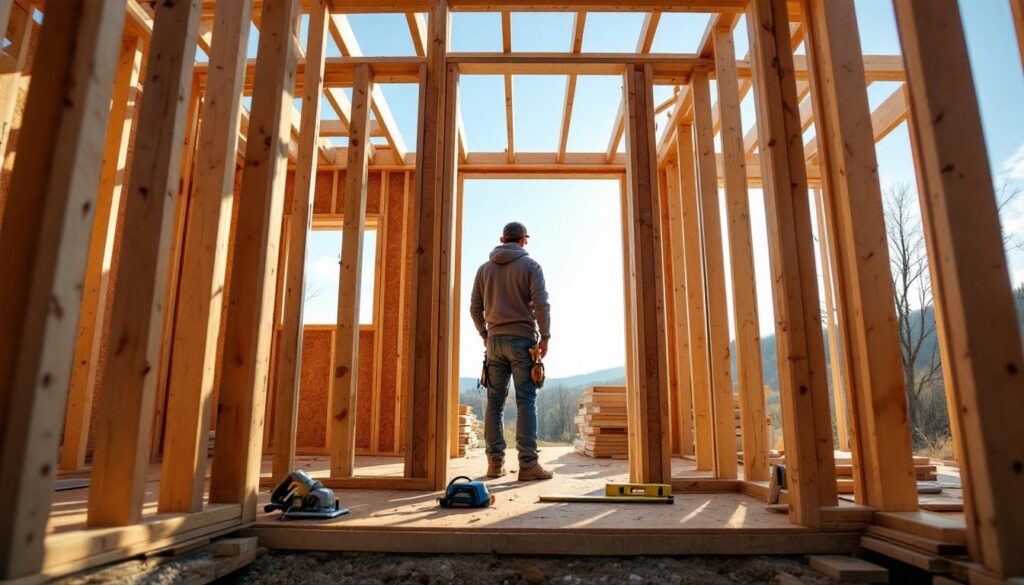
Third, assemble your crew. Some tasks, especially roof framing and raising walls, are genuinely two-person jobs. A tiny home seems solo-friendly because of its size, but framing efficiency depends on having a helper. Budget for rental equipment: scaffolding, a level, a circular saw or miter saw for angle cuts, and compressors for nailers. Cheap tools cost time and frustration.
Finally, don’t skip inspections. Building departments require inspections at foundation, framing, electrical rough-in, plumbing rough-in, and final stages. These checkpoints catch code violations early. Inspectors have seen thousands of builds and spot mistakes that’ll plague you for years. Treat them as free consulting.
Build in a realistic timeline. Tiny homes look fast because they’re small, but they’re still full-scope construction: foundation, framing, sheathing, roofing, electrical, plumbing, HVAC, insulation, and finishes. Plan for 4 to 8 months if you’re doing substantial work yourself, longer if you’re working nights and weekends.
Conclusion
Free tiny home plans democratize small-dwelling construction. They eliminate design costs and provide tested blueprints for real-world building. Success depends on choosing a plan that matches your climate and codes, understanding every detail before you start, and respecting the permit and inspection process. Tiny homes reward smart planning and honest labor. Start with the right plan, prepare thoroughly, and you’ll end up with a solid, efficient space you built yourself.